
How Arrest Warrants Work in Sheridan County
Nebraska law spells out how an arrest warrant comes to life. Section 29-404 calls for a written complaint filed with a magistrate and a reasonable-grounds decision before anything issues. Section 29-406 then directs the warrant to the county sheriff, a city or village marshal, or another police officer. In Sheridan County, a felony case starts with a preliminary hearing in County Court and moves to District Court for trial after bind-over. The court controls issuance and recall of every warrant. The Sheriff handles service and custody locally, though the office posts no public county arrest-warrant roster. A public case entry may show the complaint, the offense, and a hearing without revealing full service status, so the clerk remains the surest answer.
Written Complaint Starts a Sheridan Arrest Warrant
The complaint and the magistrate's grounds finding are where every arrest warrant begins. The charge and the court stage tell you where to look. A traffic or misdemeanor arrest warrant in Sheridan County likely sits in County Court. A felony question can move from County Court's preliminary hearing to District Court. Family and child-support enforcement orders also belong with District Court, not a traffic payment system. The county publishes no warrant-number format or public issue-code list of its own. Nebraska section 29-404 lays out the issuance path.
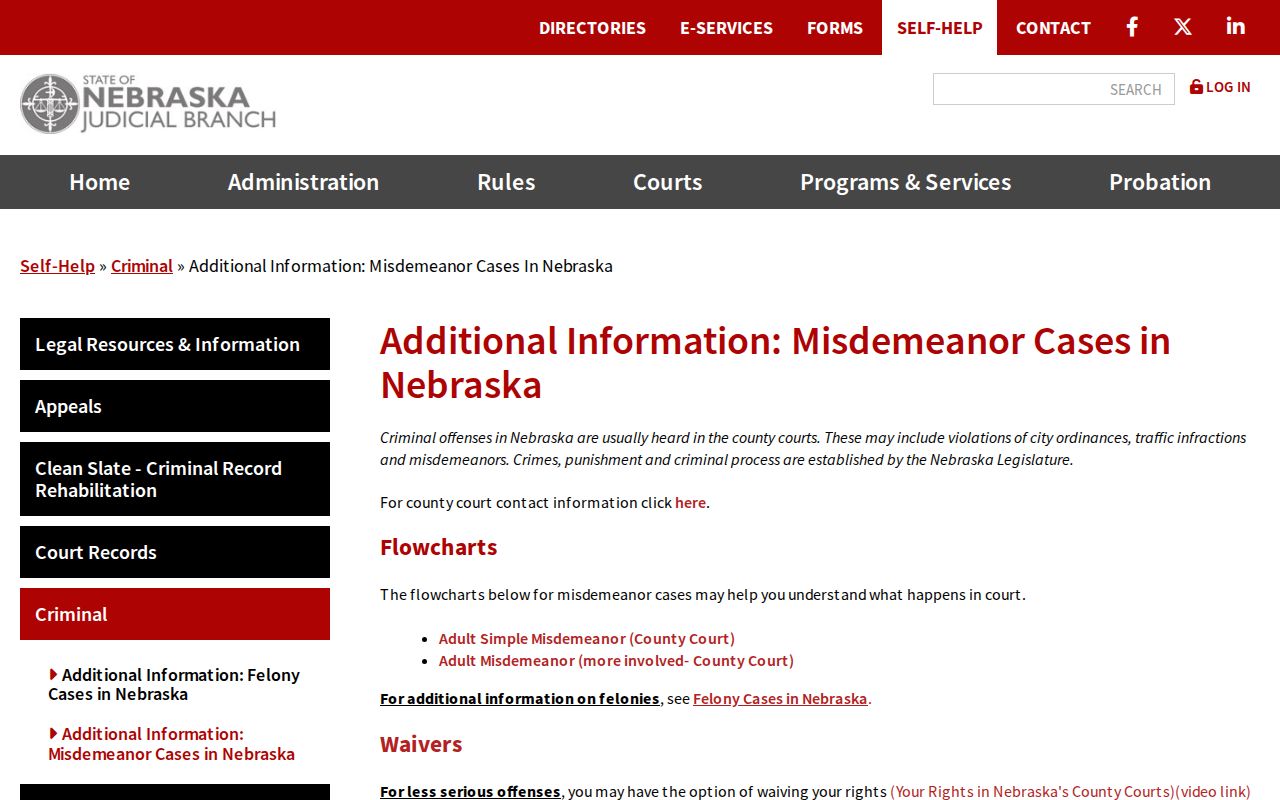
The statute image shows the warrant origin, not a named subject or local roster.
Arrest Warrants: What They Contain
JUSTICE case fields can shed light on an arrest-warrant question. A Sheridan County file may show the case summary, parties, offense information, court costs, payments, register-of-actions entries, judge notes, and document images. Warrant numbers, bond blocks, subject descriptors, photographs, and serving officers are not part of that display.
| Complaint or charge | Case offense information and filing record, subject to access rules. |
|---|---|
| Issuing court | County Court or District Court, depending on case stage. |
| Issue event | A dated order or register entry may be present. |
| Bond | Ask the court for the case-specific amount and payment route. |
| Service direction | Section 29-406 permits sheriff, marshal, or city or village police direction. |
Sheridan County JUSTICE Shows the Case
The statewide case search can track down a Sheridan County file by party name, county, court type, case type, year, judge, or attorney. A one-time name search costs $17 and returns up to 30 cases. The interface warns that data can lag 24 hours. Treat it as a lead. It cannot certify every current arrest warrant or reveal a sealed complaint. A blank result is not proof that no warrant exists, so try the likely court or ask the clerk. A misspelled name, the wrong county, a juvenile or sealed file, or service details kept off the public screen can all change the answer. Use the official JUSTICE search rather than a commercial roster.
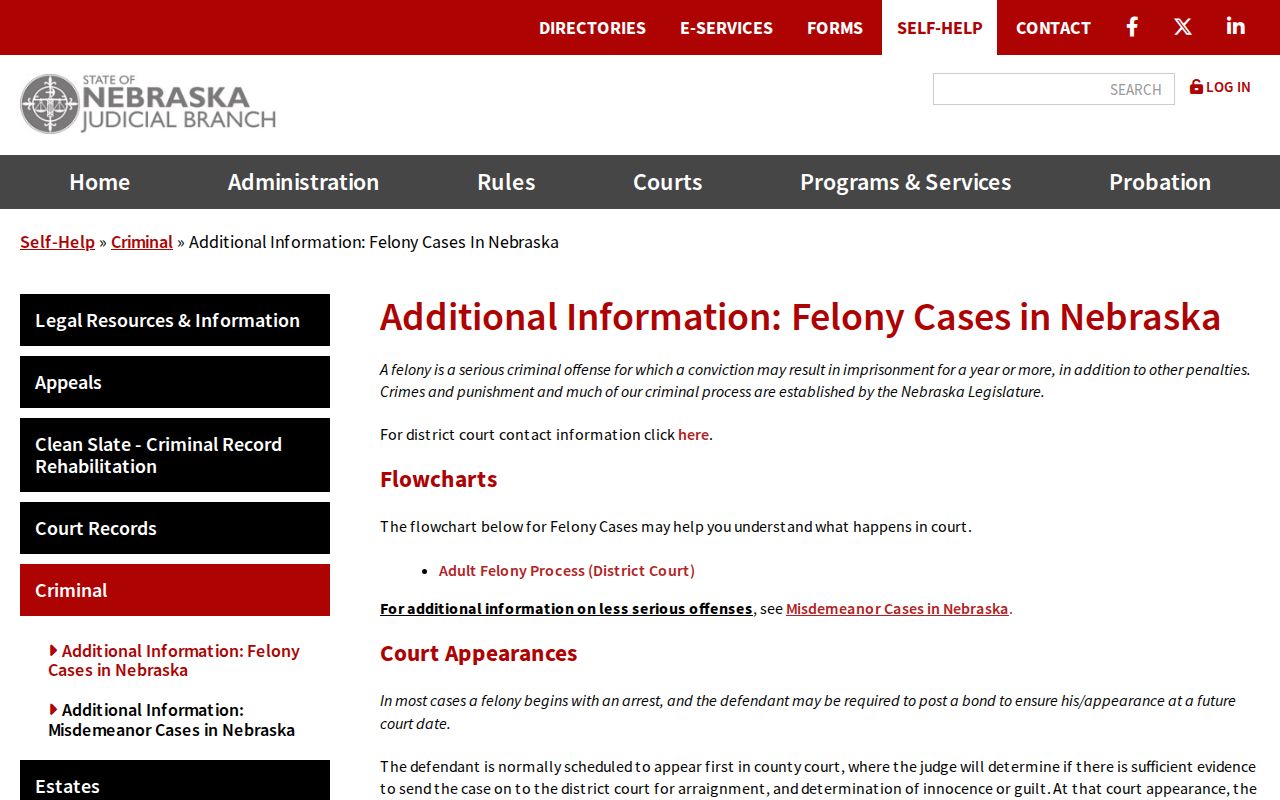
The official statute source supports the court-centered route.
How Warrants Get Served in Sheridan County
The Sheridan County Sheriff's page places the office on the jail's main floor, directly east of the courthouse. The Sheriff serves court papers, transports prisoners, runs the jail, and provides county law-enforcement functions. Nebraska law also lets a warrant be directed to a city or village marshal or other police officer. The warrant itself names who must carry it out.
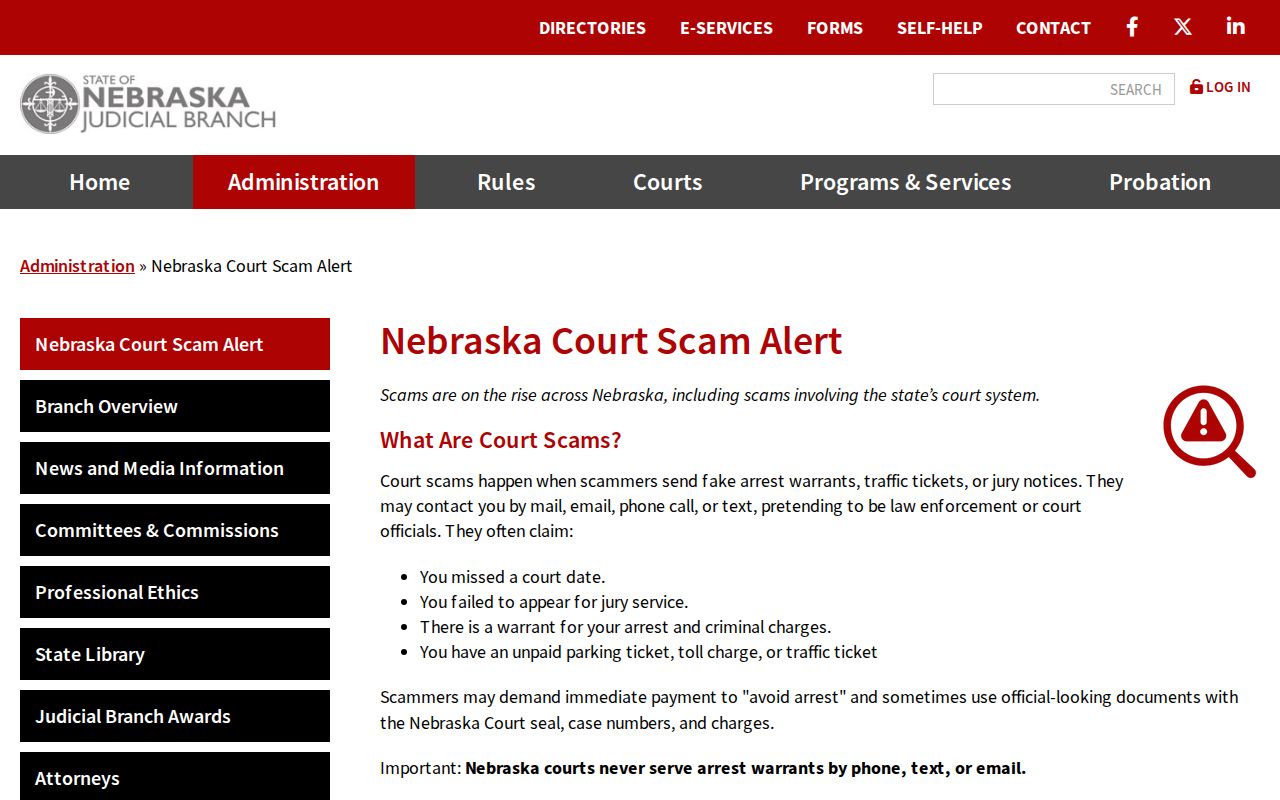
Use the official warning for payment and contact safety.
Sheriff, Marshal, or City Police?
Section 29-406 matters because the office serving a warrant may not be the court that issued it. Sheridan County has four incorporated communities, but none posts a city warrant roster or a separate municipal-court portal. The Sheriff page lists law-enforcement service for Rushville and Hay Springs and jurisdiction within Gordon city limits. Clinton goes unmentioned in that sentence. When the serving office is unclear, follow the citation or warrant direction and ask the court.
| Question | First office | Reason |
|---|---|---|
| Who issued the order? | Issuing clerk | Court controls recall |
| Who serves it? | Warrant direction or Sheriff | Section 29-406 names possible officers |
| Where to report? | Court or Sheriff after routing | Local walk-in rules were not posted |
Arrest Warrants, Summonses, and Bench Warrants
A summons simply asks a person to appear. An arrest warrant commands an authorized officer to take the accused into custody and bring the person before the court. A bench warrant is the judge's order to arrest after a nonappearance or another court-order problem. One Sheridan County case can hold more than one kind of order. Ask the clerk what a dated entry means rather than assuming each one is an arrest warrant. Search warrants are different again. They authorize a search and seizure, and their supporting papers stay confidential until execution under section 29-817. A search-warrant affidavit is not an arrest-warrant self-check.
Search Warrants Are a Separate Record
Nebraska section 29-814.04 covers probable cause and particularity for a search warrant. Section 29-817 keeps the complaint, affidavit, and testimony out of public filing until execution. Juvenile records and some investigatory materials face access limits too. If a Sheridan County search-warrant paper is missing from JUSTICE, ask the issuing court or counsel which rule applies.
Access limit: A missing pre-execution search-warrant affidavit does not answer an arrest-warrant question. The records have different purposes and different access rules.
Handling an Arrest Warrant in Your Name
Identify the case, the court, and the order before you go anywhere. Call County Court at 308-327-5656 for traffic, misdemeanor, ordinance, or preliminary-hearing questions. Call District Court at 308-327-5654 for felony or family matters. Ask whether counsel, a bond, a judge's hearing, a new appearance, or cash payment is required, then ask the Sheridan County Sheriff at 308-327-2161 about service or custody.
- Do not assume online payment recalls an arrest or FTA warrant.
- Ask for the next court date and keep the receipt or order.
- If arrested on a fine or FTA matter, ask about the section 29-2412 ability-to-pay hearing.
- Remember that release or recall does not finish the underlying case.
Calling Before Voluntary Surrender
The Sheridan County Sheriff publishes no voluntary-surrender window, no intake rule, and no after-hours process. No ID list or release timeline appears either. Showing up in person, in other words, buys no promises; the Sheriff does not guarantee that you skip booking or walk out the same day. Before you turn yourself in on a warrant, call the issuing court and the Sheriff, or have an attorney coordinate the right step. What the court approves may be an appearance, a bond, or some other order. Nebraska courts also warn that real arrest warrants are never served by phone, text, or email, and officials never demand immediate payment through a message. Hang up and dial independently verified Sheridan County and state numbers instead.
Sheridan County Arrest Warrant Case Fields
A Sheridan County clerk request works best when you bring the complaint, the case number, the court, and the dated order. The county publishes no local warrant-number format to rely on.
Sheridan County Arrest Warrant Service Questions
Ask the Sheridan County Sheriff which officer receives the warrant under the document's own direction. For confirmed service or custody instructions, the Sheriff is the office to ask.
Sheridan County Arrest Warrant Bond Questions
Bond details live with the court, so ask there for the case-specific type, amount, and payment place. The Sheridan County situation is clear on one point: the statewide ePayment system takes no bond online.
Sheridan County Arrest Warrant Recall Questions
Payment, release, and recall are separate events in Sheridan County. Keep your order or receipt, then ask when the register will update.
Sheridan County Arrest Warrant Scam Check
Nebraska courts never demand immediate payment by phone, text, or email, so skip any Sheridan County caller who does.